
Poland: reactions to Russia’s drone attacks
Russia’s unprecedented drone strikes on Poland on 9 September are framed as both a test and a warning to Europe and NATO. Moscow, adept at ‘salami-slicing’ escalation, is probing allied resolve with incremental provocations - from bombings in Kyiv to GPS jamming: each crossing a new line while eliciting mostly rhetoric. Similar tactics enabled the 2014 seizure of Crimea, and hitting Polish territory is a larger slice meant to measure the alliance’s willingness to honour Article 5. A direct military response is deemed unlikely, yet inaction risks projecting weakness and inviting the next escalation. Sanctions talk will grow, but prior rounds neither deterred invasion nor reversed it; energy sanctions that might bite remain politically constrained. The strikes also serve as a warning against deeper Western involvement in Ukraine: Russia’s deniable, ambiguous tactics could complicate any future allied deployment after a ceasefire. The core question: can NATO deter without stumbling into a wider war?
Qatar: Israeli airstrike on Hamas leaders
The dramatic airstrike by Israel on Hamas leaders in Qatar on 9 October marks a new twist in a war already destabilising the wider Middle East. Qatar, long considered Hamas’ political base and a central mediator in ceasefire negotiations, condemned the attack as a flagrant breach of international law, while regional powers including the UAE and Saudi Arabia denounced it as an assault on sovereignty. The strike targeted Khalil al-Hayya, Hamas’ exiled Gaza chief and top negotiator, but reports indicate he and others survived. Coming just a day after Hamas’ armed wing killed six people in Jerusalem, the move risks collapsing fragile ceasefire talks. In Gaza City, Israeli evacuation orders have spread panic among civilians, many already displaced and trapped in worsening conditions. This year Israel has struck Hezbollah in Lebanon, Houthis in Yemen, and Iranian-linked targets in Syria and Iran, heightening fears of a regional war.
Nepal: violent protests against corruption and ban on social media
Nepal has been rocked by its most intense unrest in decades, with corruption and nepotism at the heart of nationwide protests. The turmoil escalated dramatically after the government’s controversial ban on social media platforms triggered widespread anger, amplified by resentment over politicians’ wealth and privileges. Though Gen Z activists initially led peaceful demonstrations, they turned violent, leaving at least 29 people dead and parliament, government buildings, and private homes torched. The protesters insist that infiltrators hijacked their movement, a claim supported by the army. While regretting the violence, some are cautiously optimistic that the movement might spark reforms. The army has deployed across Kathmandu, enforcing curfews, manning checkpoints, and inviting protest leaders to talks, while some young people began cleaning debris to show their hope for change. Whether the movement will lead to accountability and new leadership, or simply further instability, remains to be seen.
Philippines: Marcos an unlikely anti-corruption crusader
The Philippines once again finds itself grappling with the enduring scourge of corruption, an issue that has haunted the last three presidents: Ferdinand Marcos Sr, Benigno ‘Noynoy’ Aquino III, and now Ferdinand Marcos Jr. He is now trying to assume the mantle of anti-corruption reform, despite his own family name being historically associated with cronyism and ill-gotten wealth. Unlike Aquino, who launched his integrity drive at the height of his popularity, Marcos Jr faces diminishing political capital, factional rifts within congress, and a resurgent Duterte camp weaponising public anger. The stakes are high: scandals such as the multibillion-peso flood control controversy threaten to erode governance credibility at a time when systemic accountability is urgently needed. The president must move beyond rhetoric, pursuing transparency and reform even within his own circles. Without decisive action, the Philippines risks sliding into deeper political instability, echoing past failures to tackle entrenched corruption and injustice.
 I trust that you will be blessed and encouraged as you read the articles, news and resources info this month.
 Light of the World - a beautiful hand-drawn 2D
  2BC’s
2BC’s  10 Days Film Preview
 15 Days of Prayer for the Hindu World - 12th-26th October, 2025
 Bible Day – Tues 30th Sept 2025, 6-8am (Pacific)
 Will you become an IPC Prayer Flame Partner?…
 Prayer changes cities! God has placed you where you are for a purpose - to pray, bless, and shine His light in your community.
 Finally, I would like to earnestly ask you to join us in covering IPC’s teams across our 15 Regional Prayer Councils in prayer at this time. Many of our leaders and workers live or travel to nations where there is persecution and unrest. Others serve in places with limited or no access to adequate healthcare.
 Every blessing,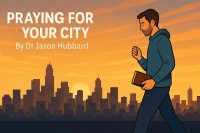
 it is your assignment from the Lord! Acts 17:26 tells us that God “determined allotted periods and the boundaries of their dwelling place,” which means you are living where you are by divine appointment.Your presence is not accidental. You are planted there for Kingdom purposes — to shine as a light (Matthew 5:14–16), to proclaim the Good News of Jesus (Luke 4:18–19), and to intercede until your city sees His glory (Habakkuk 2:14).

 3. Prayer-Walking Your Streets
 5. Encouragement for the Prayer Warriors
 Conclusion: Until He Comes
